Saudi Capital Markets Hold Strong as Industry Contracts

Record banking dividends, Aramco's global yield dominance, and a bold new PIF bond offering paint a picture of financial resilience, even as the Kingdom's industrial sector posts its steepest recorded decline.
The Saudi economic landscape this week is one of deliberate contrasts. In the financial markets, the numbers tell a story of momentum and institutional confidence: record dividends, nine straight quarters of banking profit growth, and a sovereign wealth fund bold enough to issue a 30-year dollar bond. In the factories and quarries, however, the picture is markedly different, output is falling at the fastest pace since modern measurement began.
Understanding both sides of this divide is essential to understanding where Saudi Vision 2030 stands today.
Public Investment Fund: A Trillion-Dollar Institution Goes to Market
The Public Investment Fund this week commenced marketing a three-tranche dollar denominated bond, offering maturities of 3, 7, and 30 years in what amounts to both a financing exercise and a statement of intent. The long-dated tranche, in particular, signals confidence in the Kingdom's long-term economic trajectory, testing the appetite of global investors willing to commit capital across three decades.
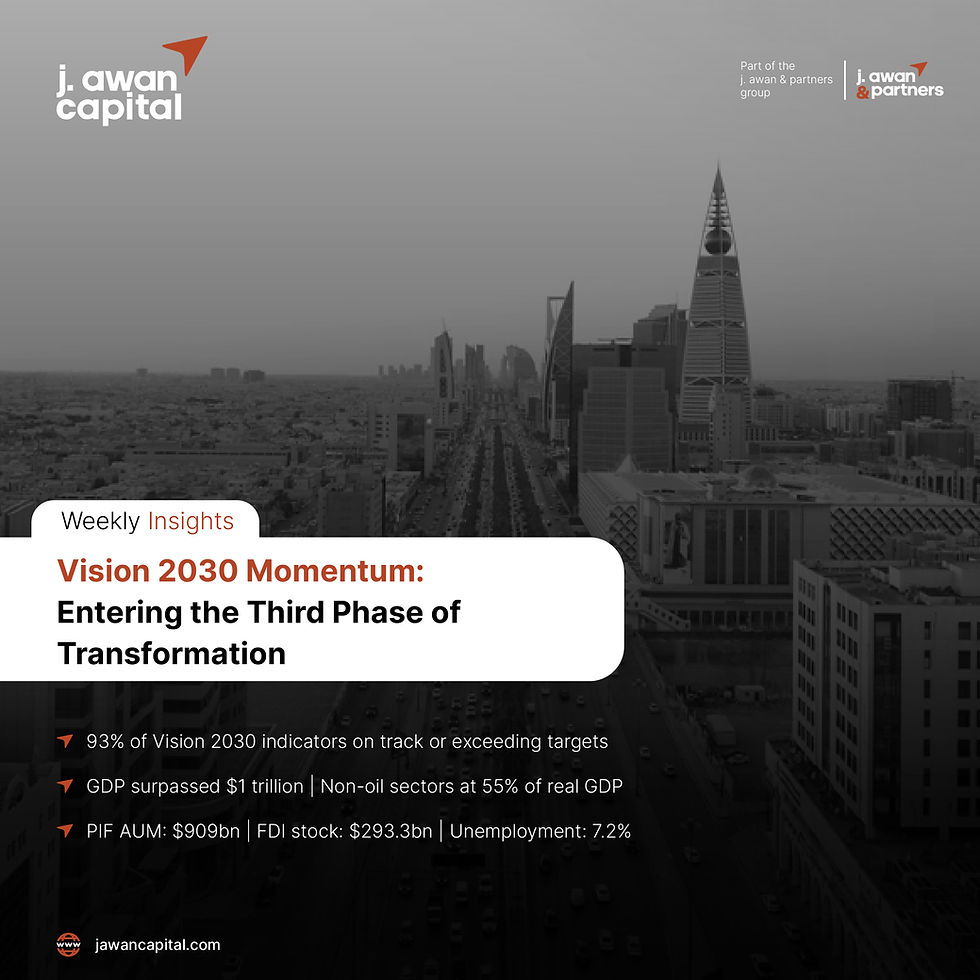
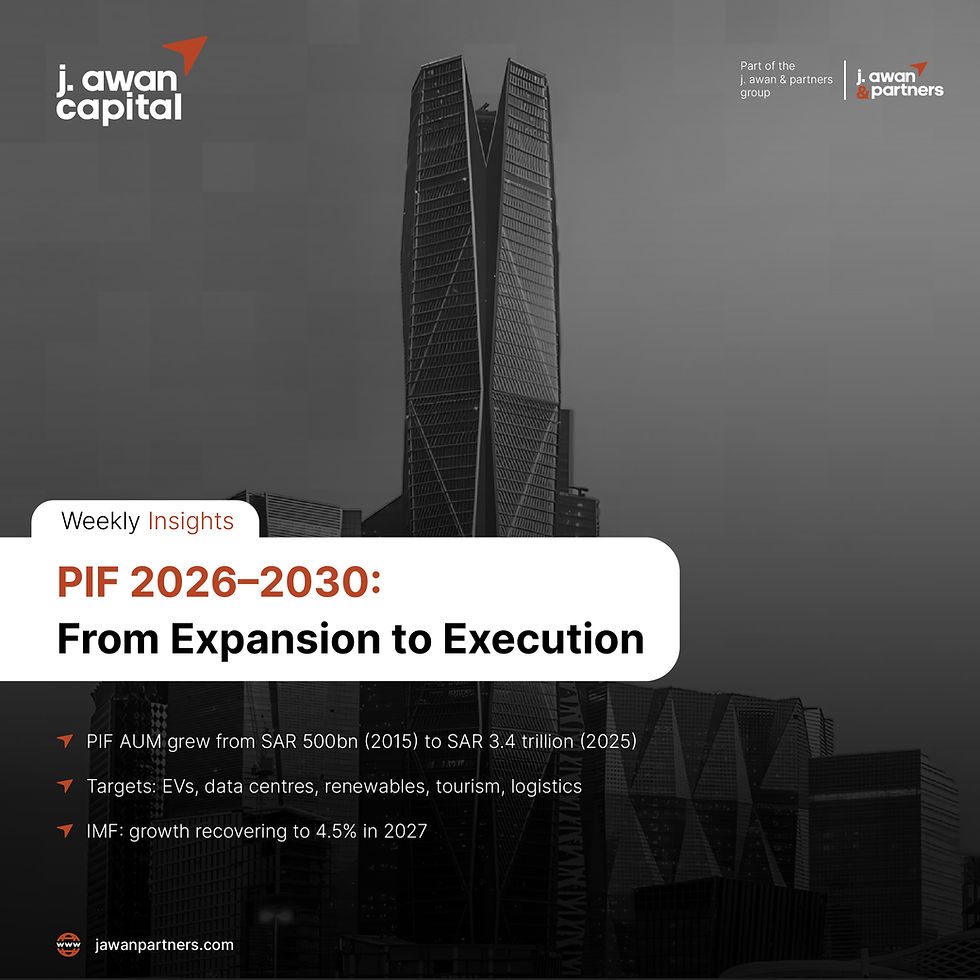
The issuance is the first under the PIF's newly unveiled five-year strategic framework, which reorganizes the fund's portfolio into three distinct pillars: the Vision Portfolio, the Strategic Investments Portfolio, and the Financial Investments Portfolio. The structure reflects a maturing institution one that has grown from 45 established companies in 2021 to 103 today, with total assets surpassing one trillion dollars by the close of 2025.
As the dominant shareholder in the Saudi banking system, the PIF also captured approximately 13% of all bank dividends paid last year, amounting to roughly SAR 5.3 billion, a quiet but significant stream of income that reinforces the fund's financial self-sufficiency.
Energy: Aramco Leads the World on Dividend Yield
According to Aramco's financial results announcement, despite a volatile geopolitical backdrop, Saudi Aramco reported a 23% year-on-year increase in first-quarter profits, reaching $32 billion. The result was driven by a combination of higher oil prices and increased sales volumes, a durable advantage that the company's low-cost production base continues to deliver.
Basic dividends for the quarter totalled SAR 82.1 billion, representing a payout of approximately 68% of net income ,a ratio that balances generous shareholder returns with continued capital investment in production capacity.
Banking: Nine Straight Quarters of Record Earnings
Al-Eqtisadiah published a report highlighting that Saudi banks distributed a record SAR 41.7 billion in dividends for fiscal year 2025, a 2% increase over the prior year. The payouts came from total sector profits of SAR 92.5 billion, yet banks chose to distribute only 45%, retaining more capital than in previous years to meet the massive financing requirements of Vision 2030's infrastructure and development agenda.
According to the report, first-quarter 2026 profits grew a further 7.6% to SAR 23.95 billion, marking the ninth consecutive quarter of record sector earnings, a streak that reflects both a healthy domestic credit cycle and disciplined cost management across the industry.
Industrial & Mining: Steepest Production Drop on Record Triggers Diplomatic Push
According to data released by the General Authority for Statistics and reported by Argaam, the Industrial Production Index fell 14.1% in March 2026 compared to the same month last year, the largest annual decline recorded since the index was introduced in 2024. The contraction was driven primarily by a 22.2% drop in mining and quarrying activity, compounded by a 4.7% decrease in manufacturing output.
The severity of the numbers has galvanized the Ministry of Industry and Mineral
Resources into action. Minister Bandar Al-Khorayef held high-level meetings this week with officials from both the United States and France, focused on attracting strategic investment in the mining and industrial sectors. The diplomatic push underscores the government's view that international capital and expertise are essential complements to domestic policy in reversing the production trend.
Budget: Sharp Deficit Widening Reflects Oil Revenue Pressures
A report published by Al Jazeera highlighted that Saudi Arabia posted a budget deficit of
SAR 125.7 billion in the first quarter of 2026, more than double the shortfall recorded during the same period last year, and up nearly one-third from the final quarter of 2025.
According to the report, the widening gap was driven by two simultaneous pressures: total government spending rose 20% year-on-year to SAR 386.7 billion, while oil revenues fell 3% to SAR 144.7 billion, a decline linked to the effective closure of the
Strait of Hormuz, which disrupted the Kingdom's primary export route.
The deficit marks a significant departure from the Kingdom's own financial projections. Saudi officials had in December forecast a deficit of just SAR 65 billion for the entirety of 2026, a figure the first quarter alone has now nearly doubled.
Saudi Arabia's economic picture this week is one of managed contrasts: exceptional strength in financial markets and energy, set against a challenging backdrop in industrial output. The PIF's bond issuance, Aramco's record dividends, and the banking sector's unbroken earnings streak provides strong buffers.
Sources
Aramco dividend yield and Q1 global peer analysis, 10 May 2026
Saudi banking sector record dividends and Q1 growth metrics, 8 May 2026
Argaam — General Authority for Statistics Industrial Production Index report, 10 May 2026
Al-Eqtisadiah — Ministerial strategic diplomacy in the US and France, 6 May 2026
Bloomberg — PIF multi-tranche dollar bond and new strategic framework, 7 May 2026
Al Jazeera — Saudi Arabia budget deficit and oil revenue decline, Q1 2026, 13 May 2026