Saudi Arabia Continues to Advance Economic Transformation Across Energy, Banking, Infrastructure, and Capital Markets

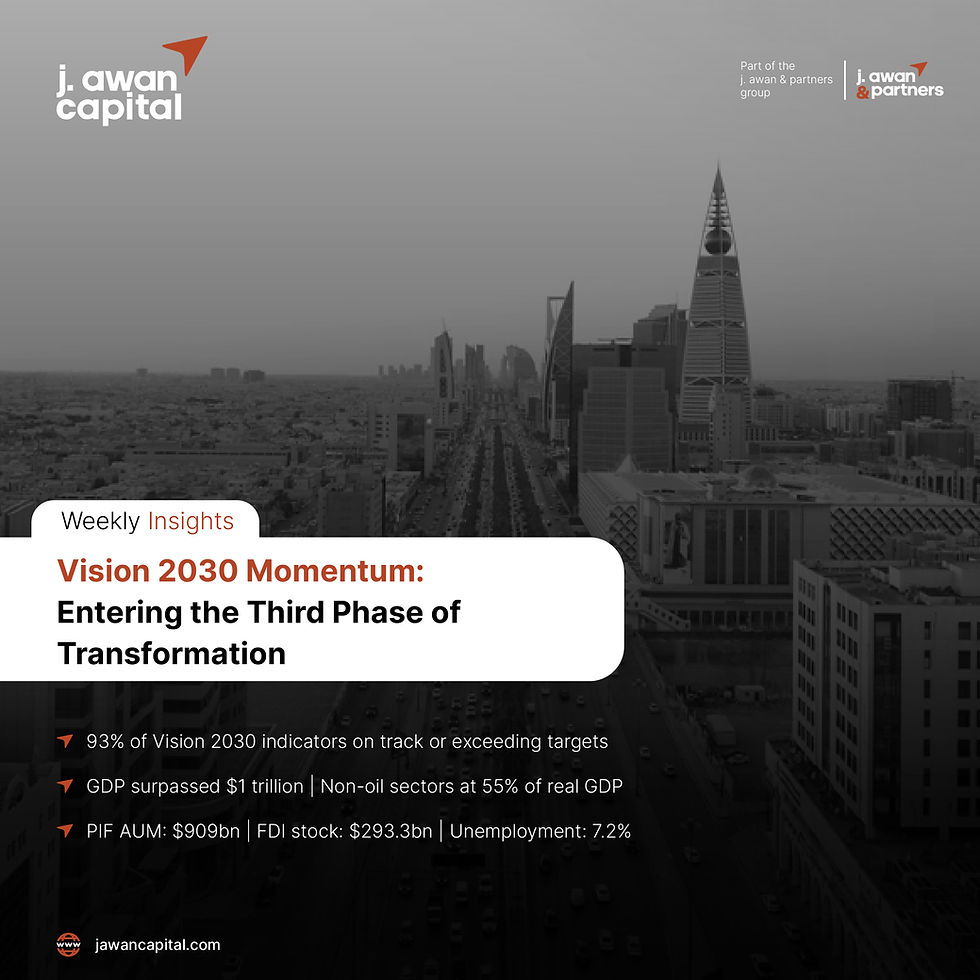
Saudi Arabia’s economy this week reflected continued momentum across several strategic sectors, including energy, banking, infrastructure, and capital markets. As the Kingdom progresses toward the objectives of Vision 2030, ongoing regulatory modernization, digital transformation, and institutional market development continue to strengthen investor confidence and support long-term economic diversification.
The week also highlighted the growing role of the financial sector in supporting private-sector expansion, alongside continued activity in corporate earnings, infrastructure benchmarking, and strategic acquisitions.
Energy Markets: OPEC+ Maintains a Disciplined Market Strategy
The OPEC+ alliance announced a coordinated production adjustment framework beginning in June 2026, involving Saudi Arabia, Russia, Iraq, Kuwait, Kazakhstan, Algeria, and Oman.
The agreement introduces a gradual production increase of approximately 188,000 barrels per day, representing the first phase of unwinding the voluntary production cuts implemented in early 2023.
Saudi Arabia’s required production level for May 2026 was set at approximately 10.291 million barrels per day, reflecting a monthly increase of 62,000 barrels per day.
OPEC+ reaffirmed that future production adjustments remain conditional on evolving global market conditions, preserving operational flexibility to pause or reverse increases if necessary.
Member states also renewed their commitment to the “Declaration of Cooperation” and compensation mechanisms addressing excess production recorded since the beginning of 2024.
The alliance’s measured approach continues to reflect a focus on market stability, supply discipline, and long-term energy market balance.
Banking Sector Expansion: Private Sector Credit Growth
The Saudi banking sector continues to reinforce its position as a key enabler of economic growth and private-sector expansion across the Kingdom.
Record Credit Levels
Bank claims on the private sector in Saudi Arabia reached approximately SAR 3.2 trillion by the end of March 2026, reflecting continued growth in domestic lending activity and capital deployment into the economy.
Strategic Economic Impact
The sustained expansion in private-sector credit highlights the banking sector’s central role in financing strategic projects aligned with Vision 2030 priorities, including infrastructure, housing, industrial development, and non-oil economic diversification initiatives.
The trend also reflects strong liquidity conditions within the banking system and continued confidence in long-term economic growth prospects across the Kingdom.
Real Estate and Infrastructure: Market Recalibration and Enhanced Transparency
Saudi Arabia’s residential and infrastructure sectors continue to evolve amid changing financing conditions and increased institutional market visibility.
Residential Financing Activity Slows
Residential mortgage financing for individuals declined to approximately SAR 4.2 billion in March 2026, representing a year-on-year decrease of nearly 50%.
The slowdown reflects ongoing market recalibration following elevated financing activity in previous periods, alongside broader interest rate dynamics affecting consumer borrowing behaviour.
Launch of Construction Sector Benchmark
In a significant step toward improving market analytics and sector transparency, Al Rajhi Capital partnered with S&P Global to launch a dedicated Saudi construction and building sector index.
The benchmark is expected to improve investor visibility into infrastructure-related opportunities and support more data-driven investment decisions across the sector.
Saudi Arabia continues to reinforce its position as one of the region’s leading investment and economic hubs through a combination of disciplined energy policy, expanding financial sector activity, infrastructure modernization, and accelerating digital transformation.
GDP Growth Performance
According to flash estimates issued by the General Authority for Statistics (GASTAT), Saudi Arabia’s real gross domestic product (GDP) expanded by approximately 2.8% year-on-year during Q1 2026.
The growth reflects continued momentum across multiple sectors of the economy and highlights the increasing contribution of non-oil activities to overall economic performance.
Sector Contribution Breakdown
Economic growth during the quarter was broad-based across major sectors:
Non-oil activities increased by 2.8%
Oil activities expanded by 2.3%
Government activities rose by 1.5% year-on-year
Non-oil sectors remained the primary engine of economic expansion, contributing approximately 1.7 percentage points to total real GDP growth during the quarter.
Sources
OPEC+ Production Adjustments and Required Production Targets (May 2026)
Residential Finance and Construction Sector Reports
Q1 2026 Corporate Earnings and Acquisition Announcements
Arab News – Saudi Arabia’s Economy Grows 2.8% in Q1 (April 30, 2026)